Shopify App Costs in 2026: What a Small Store Actually Pays Every Month

The Shopify plan fee is the cheapest line on most store bills. Basic is $39 a month. The reviews app, the email tool, the label printer software, the popup builder and the subscriptions engine sitting beside it come to $217.97 a month for a store doing 300 orders. That is 5.6 times the platform fee, and none of it appears on the Shopify pricing page.
Below is the whole bill, line by line, taken from current Shopify App Store listings. Nothing here is estimated.
Want the short version first: a small store pays roughly $0.73 per order in app fees, a bigger store pays $0.49, and the gap is the entire argument. If you would rather see what the same jobs look like with no per-app line at all, the WebForger apps list is the one-page version.
What each job on a store costs per month

Every one of these prices comes from the app's own Shopify App Store listing, checked on 20 September 2026, in USD. App pricing moves, sometimes twice a year, so treat the table as a snapshot and re-check before you budget off it.
| Job | App | Free tier | Entry paid plan |
|---|---|---|---|
| Reviews | Judge.me | Unlimited, free | $15 |
| Photo reviews | Loox | To 500 orders | $49.99 (300 orders) |
| Omnisend | To 250 contacts | $16 (500 contacts) | |
| Klaviyo | To 250 contacts | $20 (500 contacts) | |
| SMS | Klaviyo SMS | 150 credits | $15 (1,250 credits) |
| Popups | Privy | None listed | $24 (10k pageviews) |
| Shipping labels | ShipStation | None | $14.99 to $29.99 |
| Multi-carrier | Starshipit | None | $35 (100 labels) |
| Subscriptions | Appstle | To $500 a month | $10 to $30 |
| Loyalty | Smile | To 200 orders | $15 (500 orders) |
| Upsell | ReConvert | To 50 orders | $9.99 (2,000 orders) |
| Landing pages | PageFly | Yes, limited | $24 |
Two patterns are worth naming before the totals. First, almost every free tier is metered by orders, contacts or pageviews rather than by features, so the free plan expires by growth, not by choice. Second, the entry paid plans cluster between $10 and $30, which is exactly the range where a single line item never feels worth arguing about. The damage is done by the count, not by any one price.
- Ten standard store jobs, twelve listed apps, and every one of them is a separate charge with its own renewal date
- Free tiers are volume-capped, so the first growth spurt converts several of them to paid at once
- The average Shopify store runs 6.2 apps, and 12 percent run ten or more, according to StoreCensus data published 19 September 2026
The same 300-order store, two ways
Take a store doing 300 orders a month with about 500 email contacts, one shipping origin and a small subscription line. Two merchants running that exact business can land $137 a month apart depending only on which apps they installed in their first year.
| Line item | Lean build | Typical build |
|---|---|---|
| Reviews | Judge.me $15 | Loox Convert $49.99 |
| Omnisend $16 | Klaviyo $20 | |
| SMS | Not used | Klaviyo SMS $15 |
| Popups | Not used | Privy $24 |
| Shipping labels | ShipStation $29.99 | ShipStation $29.99 |
| Subscriptions | Appstle Starter $10 | Appstle Business $30 |
| Loyalty | Not used | Smile Essential $15 |
| Landing pages | Not used | PageFly $24 |
| Post-purchase upsell | ReConvert $9.99 | ReConvert $9.99 |
| Apps per month | $80.98 | $217.97 |
| Apps per year | $971.76 | $2,615.64 |
| Shopify Basic plan | $39 | $39 |
| All in, per year | $1,439.76 | $3,083.64 |
The lean build is five apps. The typical build is nine, which is above the platform average but well inside what a store with a loyalty programme and a landing page habit ends up carrying. Neither column contains an extravagant choice. The $2,615.64 is what happens when nine reasonable decisions are made one at a time, months apart, each one costing less than a tank of fuel.
One detail that quietly inflates both columns: App Store charges run on 30-day cycles, not calendar months. A year is 12.17 cycles, so the annual figures above are about 1.4 percent light.
- Same store, same order volume, $1,643.88 a year of difference from app selection alone
- The Shopify plan is 33 percent of the lean bill and 15 percent of the typical one
- No single line in either column is expensive enough to trigger a review, which is why the stack never gets audited
Why the shipping line moves first
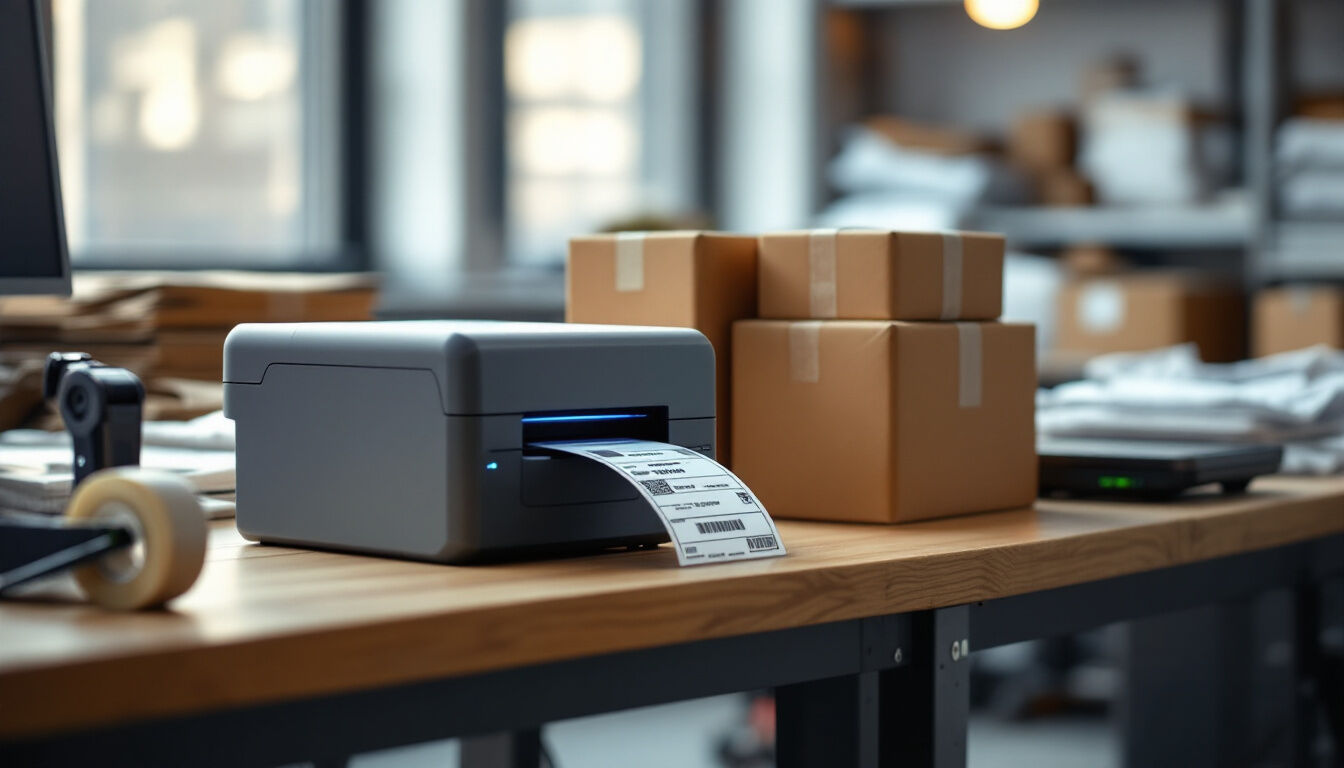
Shipping software is where the metering is most visible. Starshipit's Starter plan covers 100 labels and two carriers for $35. Starter Plus is $100 for 500 labels. There is no tier between them, so the 140th parcel in a month costs the same as the 499th: an extra $65. ShipStation's published plans read $14.99, $29.99 and $349.99, with the listing noting that charges vary by geography and monthly order volume on top of the plan fee.
The same shape repeats everywhere. Loox charges $49.99 for the first 300 orders a month and $50 for every additional 300. Smile jumps from $15 at 500 monthly orders to $79 at 1,000 and $199 at 2,500. Privy's entry plan buys 10,000 monthly pageviews. In each case the feature set barely changes between tiers. You are not buying more software as you grow, you are buying permission to keep using the same software.
Takeaway: app tiers are metered on your volume, not on their cost of delivery, so the bill tracks your growth curve whether or not the app is doing anything new.
The same stack at 1,200 orders a month

Now run the typical build at 1,200 orders a month and 2,500 email contacts. Four times the orders, the same nine jobs, the same nine apps, zero new capability.
| Line item | 300 orders | 1,200 orders |
|---|---|---|
| Reviews (Loox Convert) | $49.99 | $199.99 |
| Email (2,500 contacts, Omnisend Pro) | $20 | $59 |
| SMS (Klaviyo, 1,250 credits) | $15 | $15 |
| Popups (Privy) | $24 | $24 and rising with pageviews |
| Shipping (ShipStation Standard) | $29.99 | $29.99 plus volume charges |
| Subscriptions (Appstle Business) | $30 | $30 |
| Loyalty (Smile) | $15 Essential | $199 Growth |
| Landing pages (PageFly) | $24 | $24 |
| Upsell (ReConvert) | $9.99 | $9.99 |
| Apps per month | $217.97 | $590.97 |
| Apps per year | $2,615.64 | $7,091.64 |
| Shopify plan | Basic $39 | Grow $105 |
| All in, per year | $3,083.64 | $8,351.64 |
Two of those numbers need an honesty note. Klaviyo does not publish a 2,500-contact price on its listing, so the email row uses Omnisend Pro at $59, which is published. Privy's listing publishes only the 10,000-pageview entry tier, and a 1,200-order store is past that, so $24 is a floor rather than the real figure. Both substitutions make the right-hand column cheaper than reality, not more expensive.
- Orders up 4x, app bill up 2.7x, capability unchanged
- Two line items, reviews and loyalty, account for $334 of the $373 monthly increase
- Year three of that trajectory is a five-figure software bill for a nine-app store
The part that is fair, and the part that is not
The fair part first, because the Shopify ecosystem deserves it. These are good products. Judge.me's free tier collects unlimited reviews forever and most stores never need to leave it. Shopify ships first-party apps for subscriptions, forms and email that cost nothing to install. A store under 200 orders a month can run a genuinely complete setup for close to zero, and the depth of the App Store is a real reason merchants choose Shopify over everything else. The vendors charging $15 a month are not gouging anyone. Most of them are small teams shipping faster than any platform could.
The unfair part is arithmetic. At 300 orders a month the typical stack costs $0.73 per order. At 1,200 orders it costs $0.49. The smallest store pays the highest rate per order for the same software, because every app prices its bottom tier at whatever a merchant will not argue about rather than at what the work costs. At a $60 average order value, 300 orders is $18,000 of monthly revenue, and $217.97 of apps is 1.2 percent of turnover before Shopify's own fee, before card fees, before the cost of goods. On $72,000 it is 0.8 percent. Scale earns the discount, and the store least able to fund it pays the premium.
Takeaway: the problem is not that apps cost money, it is that the per-order rate is regressive, so small stores subsidise the pricing model that larger stores benefit from.
What "apps included" changes about the maths
This is the part where we have skin in the game, so here is the exact claim and nothing more. WebForger sites ship with the platform apps included: reviews, bookings, rental bookings, shipping, Google reviews, announcements and lead handling, with no per-app fee and no metering by order count. Adding reviews to a store does not add a line to a bill, and passing 500 orders in a month does not change what the site costs to run. The apps page lists what is in the box.
That is a different pricing model, not a cheaper version of the same one, and it comes with its own trade. Shopify has thousands of apps and we have a fixed set, so a store that needs a niche integration is better served by the App Store. A store that needs the standard jobs done and is tired of watching nine renewal dates is the one this suits. San Michelle Bags, an Auckland luggage and leather goods retailer, moved off Shopify onto this model, carried its Judge.me review history across, and now runs reviews and shipping with no app bill behind them. If you are weighing the whole switch rather than the app bill alone, the Shopify alternative comparison covers what you give up as well as what you save. And if the renewals are only half the problem, the other half being that nobody can change the site without a quote first, WebForger Plus is where that same included-apps model sits alongside a named account manager and unlimited edits.
Frequently asked questions
How much do Shopify apps cost per month on average?
A small store running the common stack of reviews, email, shipping, subscriptions and upsells pays between $80 and $220 a month in app fees on top of the Shopify plan, based on current App Store listings as of September 2026. The average store runs 6.2 apps, which puts most merchants in the middle of that range.
Can you run a Shopify store with only free apps?
Yes, under about 200 orders a month. Judge.me collects unlimited reviews free, Omnisend and Klaviyo are free to 250 contacts, Smile is free to 200 monthly orders and Shopify's own subscriptions app costs nothing. The free tiers are capped by volume, so the setup stops being free the month you grow past the caps rather than the month you want a new feature.
Why do Shopify app prices jump so much between tiers?
Because tiers are metered on your order count, contact count or pageviews rather than on features. Smile goes from $15 at 500 monthly orders to $79 at 1,000 and $199 at 2,500 with broadly the same functionality, and Starshipit goes from $35 for 100 labels to $100 for 500. Crossing a cap by one unit costs the full step.
Do app fees appear on the Shopify bill?
Usually but not always. Most App Store charges are billed through Shopify every 30 days in USD, which is why a year is 12.17 billing cycles rather than 12. Some vendors, including Klaviyo and ShipStation, bill parts of their usage separately from the Shopify invoice, so the Shopify invoice alone understates the real total.
Is a higher Shopify plan cheaper than paying for apps?
No. Moving from Basic at $39 to Grow at $105 changes card rates and staff accounts, not app access. Only Shopify Plus, from $2,300 a month, unlocks custom apps using Shopify Function APIs for checkout logic. Below that tier, plan upgrades and app fees are separate bills solving separate problems.
Where to start
Open your last Shopify invoice, list every recurring app charge next to the job it does, and mark the ones metered by order count. That list is your next twelve months of software cost, and it will grow faster than your order volume does. Most merchants have never seen it written down in one column.
If you want a second opinion on what that stack would cost run differently, tell us what you sell and what your nine apps currently do. We will give you the honest version, including the cases where staying on Shopify is the right call. The enquiry form takes about two minutes, and there is no call at the end of it unless you ask for one.
All prices in USD, taken from public Shopify App Store listings and Shopify's pricing page on 20 September 2026. App pricing changes regularly, so verify current figures before budgeting.