Rental Booking
FREE Included with every WebForger site
Sell a date range instead of a unit. The customer picks the day they need the item, the calendar knows which sizes are already out, and the dates are held while they pay so two people cannot book the same piece. It runs inside the same checkout as everything else you sell, so a hire and a purchase can sit in one order.

What it looks like on a working hire store.
Screenshots taken from the product page of a designer dress rental boutique in New Zealand whose store runs on WebForger, with real orders going through it. Nothing below is a mockup or a design concept.
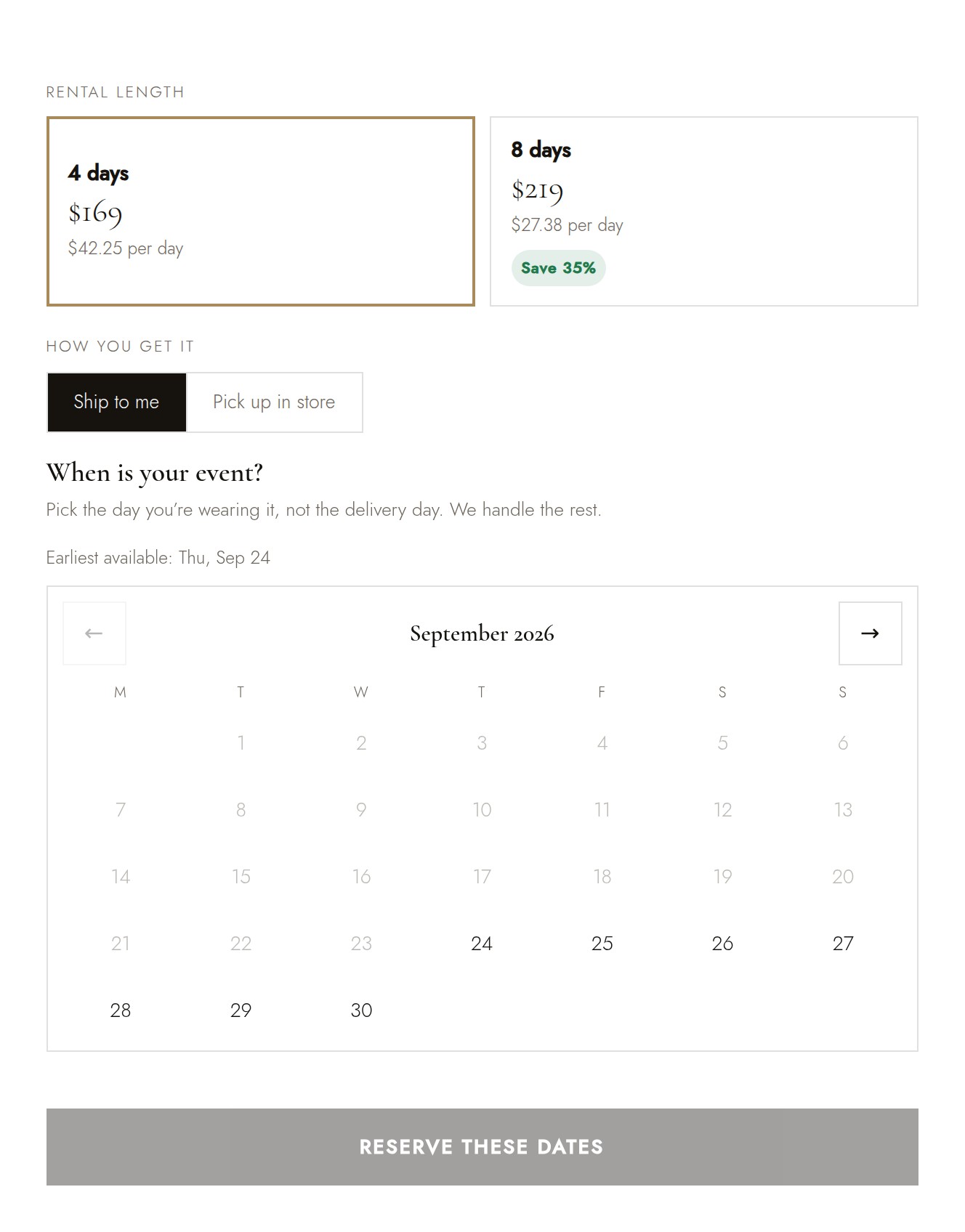
Hire length, collection method and the calendar. The days that are greyed out are the ones this size genuinely cannot be delivered for, worked back from the courier and turnaround times set for the product.
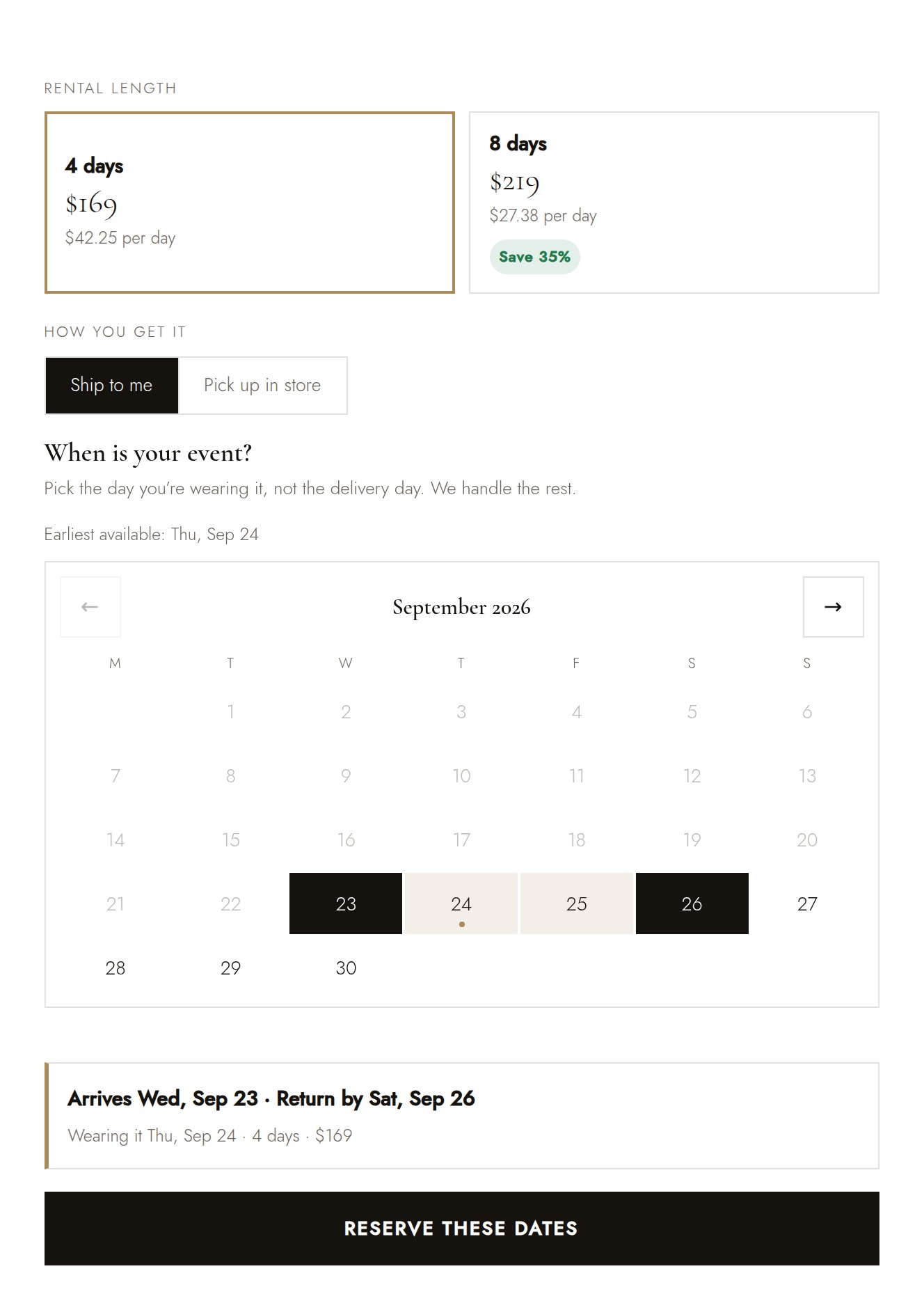
The customer picks the day of the event. The app marks the whole block it has to take off the shelf for that, and states in one line when the item arrives and when it must be sent back.
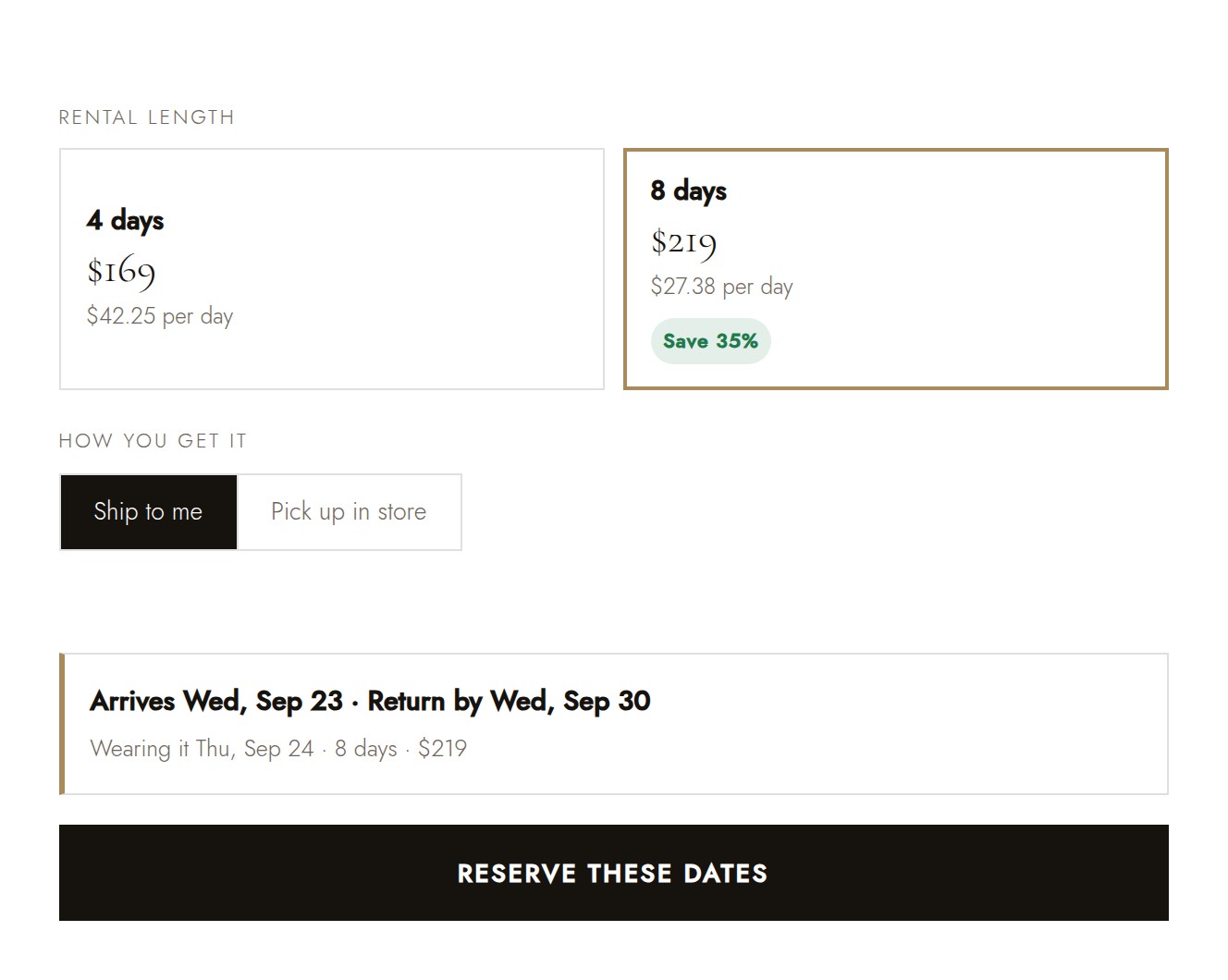
Switching to the longer hire keeps the same wear date, drops the per day rate and pushes the return date out. The saving is shown rather than left for the customer to work out.
A hire business is an inventory problem wearing a shop's clothes.
Retail software counts units. A hire business does not have units, it has days. The same dress can be sold forty times a year and still be double booked once, and that one clash costs you the order, the reputation and usually an evening on the phone. Most hire shops solve it with a spreadsheet beside the till and an email address that asks people to check availability first, which loses every customer who wanted to book at midnight.
This app keeps a ledger of days rather than a stock number. Each size of each product has its own calendar, every booking writes its days into it, and the days you need for cleaning and for the courier in both directions are written in too, because those days are just as unavailable as the days the customer has it. We built it for a dress rental boutique that was taking bookings by direct message, and then gave it to every store on the platform.
- Every size keeps its own diary. A size ten going out for a wedding does not make the size fourteen unavailable, which is the single most common thing a stock count gets wrong about hire.
- Turnaround days are never sold. Cleaning time, preparation time and the courier legs out and back are reserved with the booking, so the calendar offers dates you can actually honour instead of dates that look free.
- The dates are held while they pay. Choosing a range takes it off the calendar for the length of the checkout. If the payment does not complete, the hold expires on its own and the days go back on sale rather than sitting blocked behind an abandoned cart.
- The customer picks the day that matters to them. They choose the day of the event, not the day the parcel should leave your shop. Working backwards from that to a dispatch date is the app's job, and it is the step most hire websites hand to the customer and then lose them at.
- It is your existing store, not a second system. Hire lines go through the same cart, the same payment and the same order screen as anything you sell outright, with the dates printed on the order, so nobody is reconciling a booking tool against a shop at the end of the month.
Four jobs, none of them your problem.
Keep the calendar honest
Availability is a record of days, one row per day per size, rather than a number that gets decremented. A day is free or it is not, and a clash is impossible rather than unlikely, because two bookings cannot claim the same day. Expired holds are cleared as part of the same write, so an abandoned cart never leaves a day stranded.
Reserve the turnaround
Preparation days, cleaning days, courier days out, courier days back, a minimum lead time and the weekdays your courier does not deliver on are all settings. They can be set for the whole store, overridden for one product, and overridden again for a single size, so the fragile piece that needs a week of care does not force the rest of the rail to wait a week too.
Take the money
Hire lengths are priced as tiers, four days and eight days for instance, each with its own price and a per day rate shown next to it so the longer option sells itself. The line goes into the normal cart carrying its dates, the hold survives until payment succeeds or the checkout is abandoned, and the confirmed booking is written against the order rather than against a separate booking system.
Sell and hire from one shop
A product is rentable or it is not, and the two kinds live in the same catalogue. Accessories you sell outright sit next to garments you hire, in one cart, one payment and one order confirmation. The order screen shows the dates on the hire lines and nothing extra on the rest, which is how a shop with both stops needing two systems and two sets of numbers.
Three steps, and two of them are ours.
We set your turnaround
Tell us your hire lengths and prices, how long you need between wearers, how long the courier takes each way and which days it does not run. We switch the app on and the booking panel appears on the product pages you mark as rentable.
A customer books a date
They choose a size, a hire length and the day of their event. The calendar only offers days that size can actually make, the arrival and return dates are spelled out, and choosing them puts a hold on the whole block while they check out.
The days are yours to plan
Payment turns the hold into a confirmed booking on the order, with the dates attached. If the payment never happens the hold expires and the days return. Either way nobody has to remember to update anything.
What people ask before turning it on.
Is the rental app really free?
Can two people book the same item for the same weekend?
How do cleaning and postage days work?
Can we hire some products and sell others?
What about pickup instead of shipping?
Two more apps that work on the same problem.
Every app on the platform is included on every site at no monthly fee.
Booking
FREE
The appointment version. A customer asks for a service at a time, you confirm or decline it in one click from the email, and the customer is told either way. Use it when what you are booking is your own hours rather than an object.
Shipping
FREE
Labels, tracking and dispatch from inside the order screen rather than a separate courier portal. A hire business posts everything twice, so the half hour a day this saves is worth more here than almost anywhere else.
Let people book the weekend they need, at midnight, without asking you first.
WebForger is invite only, so the first step is a short application rather than a signup form. Tell us what you hire out, how you track availability today and what your turnaround looks like between one customer and the next. If we are not the right fit we will say so, and you will still leave with a straight answer.