LouvreSky
Outdoor louvre roofs and shade systems, Auckland Full site rebuild
An Auckland company that designs, engineers and installs aluminium louvre roofs and pergolas rebuilt its entire website with us, then used it to open a second city. The page that sells Hamilton was built once. The next town is a copy, a set of local photos and a day, not a new website project.
What the site looks like today.
Screenshots taken from the live site, not from a mockup. The logo, the photography and the engineering claims are the client's. The pages, the templates and the machinery underneath are ours.
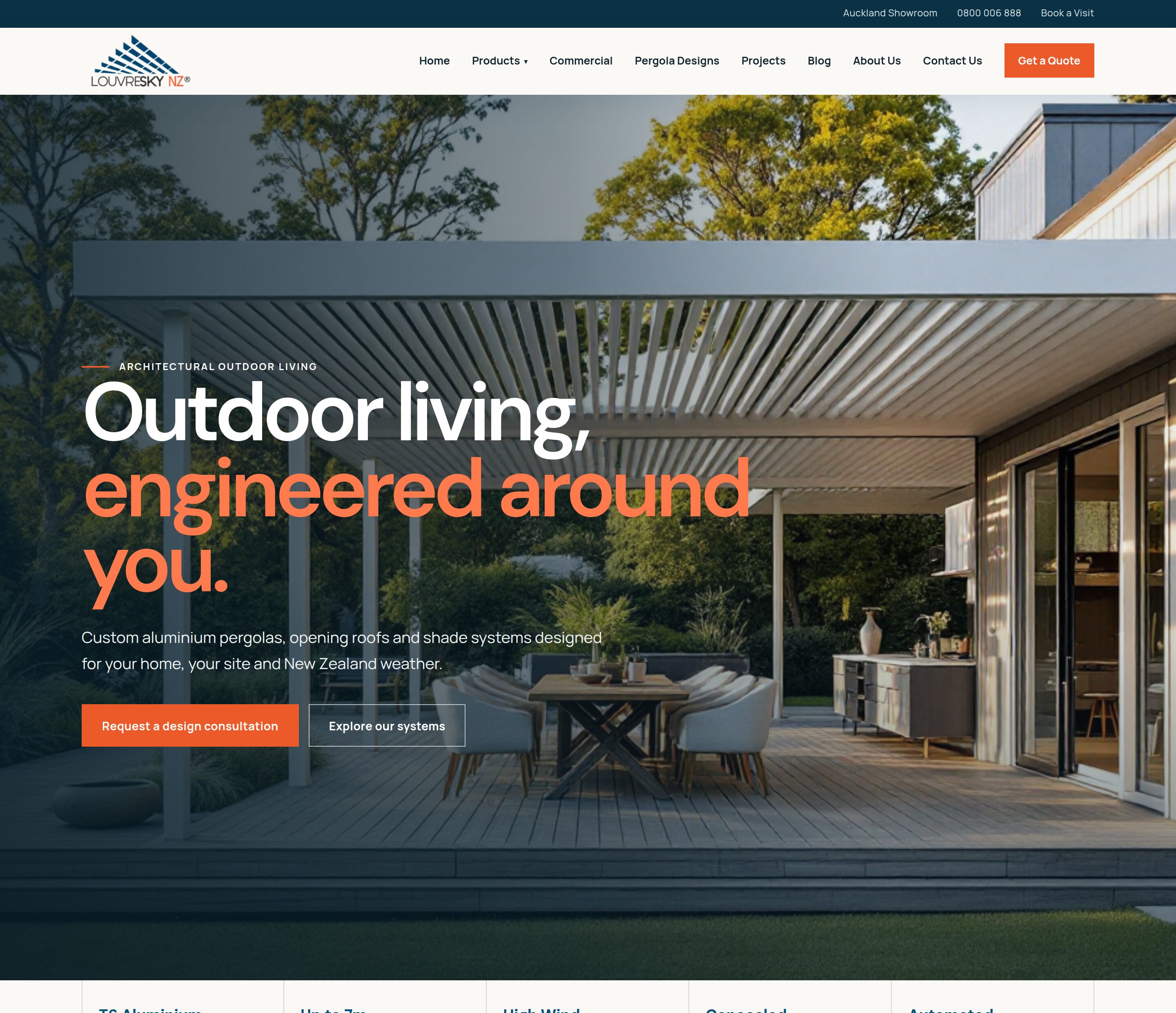
The homepage. A company that sells engineered, made to measure structures needed a site that looked like an architecture practice rather than a product catalogue, so the photography runs full width and the specifications sit directly under it.
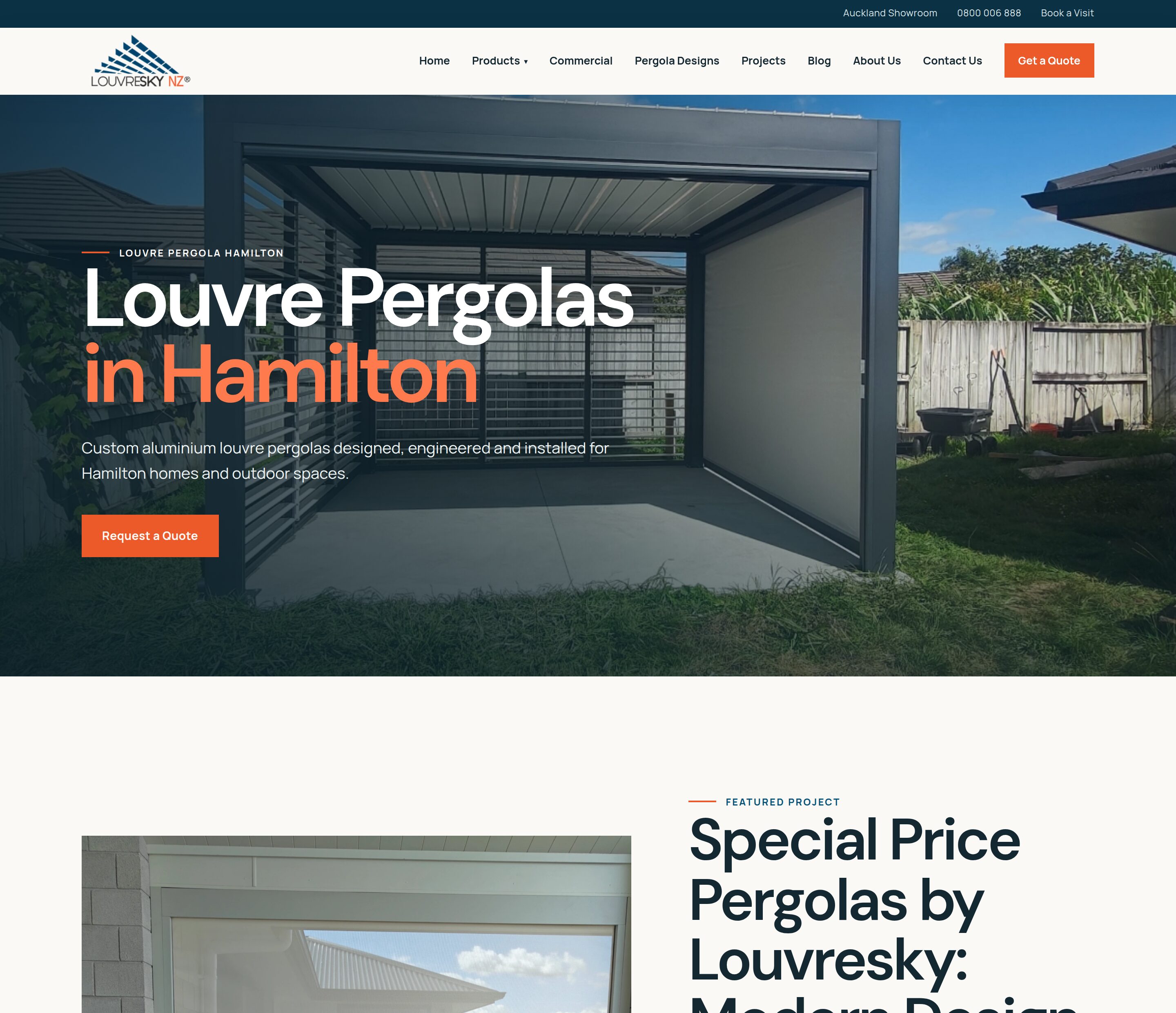
The Hamilton page. A city headline, a featured local project, a gallery of work in that region and a quote form, all on one URL that an ad or a search result can point at. This is the unit that gets copied for the next town.
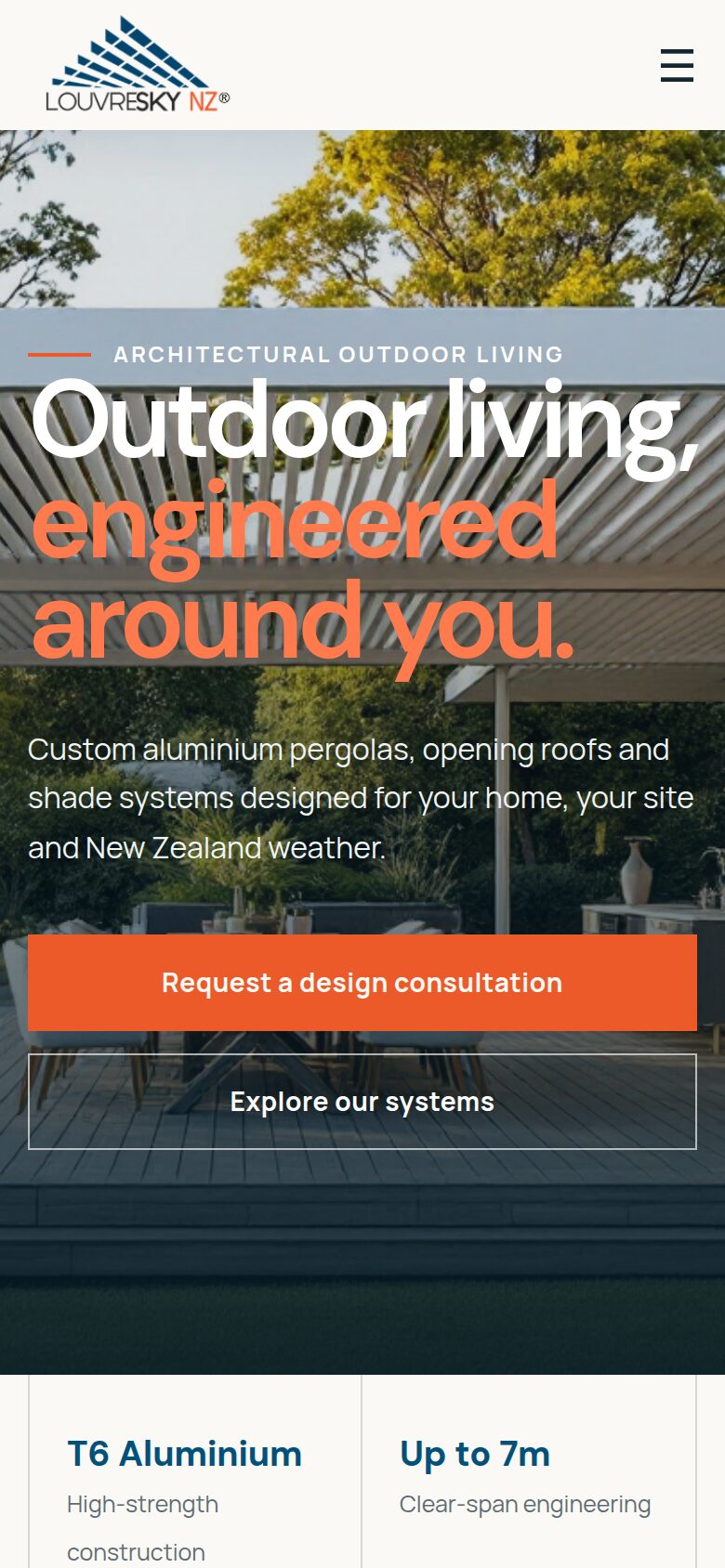
The same homepage at 390 pixels wide. Full bleed photography is the easiest thing in the world to break on a phone, so every page on this site is checked at this width before it goes up.
Premium work, described by an ordinary website.
LouvreSky sells the opposite of an off the shelf purchase. Every structure is measured on site, drawn in 3D, engineered for the wind the property actually gets and then manufactured to that drawing. The website in front of that process was doing none of the arguing. It also carried years of accumulated material, a long blog and a photographed archive of finished projects, which is exactly the kind of library that makes people put a rebuild off.
So the job was two jobs. Rebuild the whole thing, twenty pages plus the blog and the project archive, more than a hundred URLs in all, in a design language that matches the work. Then make it a site the business can keep pushing on: pages the team can edit themselves, a template that turns into the next city page, and enquiries that arrive somewhere the office actually looks.
A site, and a way to grow it.
The whole site, not the front of it
Product and system pages, the commercial page, the process and about pages, the blog library and the project archive were all rebuilt rather than parked on the old platform behind a link. The logo and the photography are the client's originals. Every piece of text and every image on the rebuilt pages carries an editing handle, so the team changes wording in the back office instead of asking anyone.
A city page shaped like a template
The Hamilton page is deliberately made of parts: a city headline, one featured project, a gallery of regional work, the showroom details and a quote form. Nothing in it is welded to Hamilton. That is what makes a second and a third town a content exercise with a known shape, rather than a fresh design brief every time the business decides to push into a new region.
Three ways to ask, one place to look
Request a quote, book a showroom visit and the contact form are different conversations at different stages, and all three are platform forms rather than a rented form service. Submissions land in the site's own inbox in the dashboard and go out by email at the same time, so nobody has to remember a second login to find out who enquired this morning.
Enquiries that report back to the ads
Because the site owns the form rather than a third party, it can send qualified enquiries back to Google Ads as conversions. The ad account then optimises against leads the business actually wants instead of raw form fills, which is the difference between paying for volume and paying for work. It is a switch on the platform, not an integration project.
What happens when this client asks for something.
This is the part that does not fit in a feature list. Requests arrive as a screenshot, a Word document or a link to a page they like. What matters is what comes back, and how fast.
Five points in a Word document
The ask. A document listing five things across three pages: a banner photo to swap, two image grids cropping their drawings and photos, and sections of text sitting on the page with nothing beside them.
What we did. All five went live the same day, with the grids changed to show each image whole rather than cropped to fit. One supplied photo was only 675 pixels wide, too small for a full width banner, so we said so, used one of their own installation shots instead and told them exactly what to send if they want that image back.
A second city, asked for properly
The ask. They sent the Hamilton page and asked for a Christchurch version of it.
What we did. We did not start building half a page. We replied with the two things that page needs to be worth publishing, local project photography and how they want the South Island service area and contact details written, and said the page goes up the day those arrive. A city page with stock images and a vague service area is worse than no city page.
One inconsistency, fixed everywhere
The ask. The opening hours in the footer read "Mon to Friday" above a line that read "Sat". They asked for the two to match.
What we did. We fixed it in the footer and then in every showroom block on the site, not only where they had pointed, because an inconsistency they noticed once is one their customers see on every page. The same reply carried a new hero photo they had supplied for the commercial page.
One of ours is running here.
Every app on the platform is included on every site at no monthly fee. On a site where the work is expensive, custom and bought on trust, this is the one that earns its place.
Google Reviews
FREE
What homeowners have written about LouvreSky on its Google business profile, rendered as a real section of the homepage in the site's own type and colours rather than dropped in as a grey third party widget. The page says plainly that the company neither writes nor edits them, which is the entire point of putting them there.
Selling a considered service in more than one town?
If the plan is to be found in the next city, and the one after that, the thing you need is not another website. It is one page that works, built so the second and third versions of it are an afternoon of local content rather than a new project. Tell us what you install, where you install it and which regions you want next. WebForger is invite only, so the first step is a short application rather than a signup form.